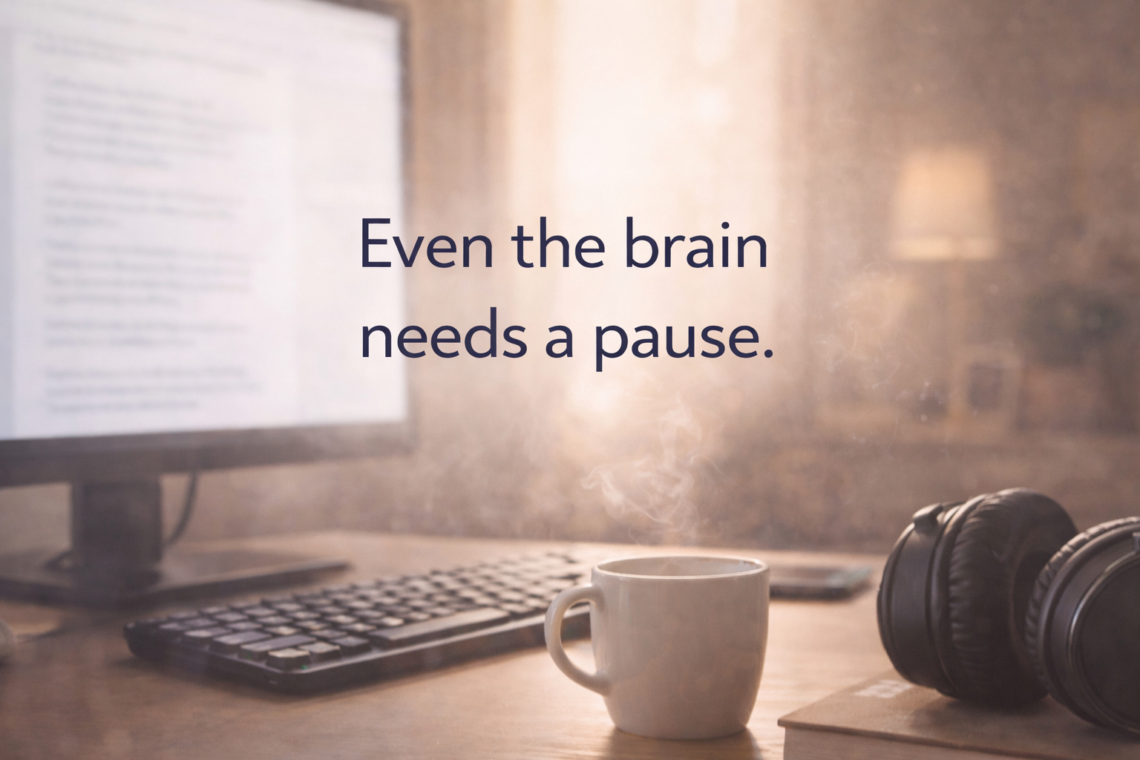
Spending long periods on a computer or focusing on one task can quietly increase the load on the nervous system.
Eyes, brain, posture, and concentration are all working continuously.
Over time this can lead to:
• mental fatigue
• headaches
• sensory overload
• reduced concentration
Taking short breaks allows the nervous system to reset.
Standing up, stretching, resting the eyes, or stepping away from screens for a few minutes can help restore energy and focus.
Even small pauses during the day can make a noticeable difference.
Tools That Can Help With Hyperfocus
Hyperfocus can be helpful for concentration and creativity, but it can also make it easy to miss signals for rest, hydration, or movement.
Some simple tools can gently remind the body and brain to pause.
1. A Timer
Setting a timer can help create natural stopping points.
For example, working for 20–30 minutes and then taking a short break can prevent long periods of intense focus.
Many people use simple timers or approaches like the Pomodoro method.
2. Visual Timers
Visual timers show time passing in a way that is easy to see.
Instead of just hearing an alarm, you can see the remaining time, which can make it easier to pace activities and take breaks.
This can be particularly helpful for people who tend to lose track of time.
3. Break Reminders
Some apps or computer tools provide gentle reminders to pause.
These reminders can encourage small resets such as:
• standing up
• stretching
• resting the eyes
• stepping away from screens
Even short breaks can help the nervous system settle and maintain energy over the day.
Simple reminder
Hyperfocus can be a strength.
The goal isn’t to stop it — just to support the body with regular pauses.