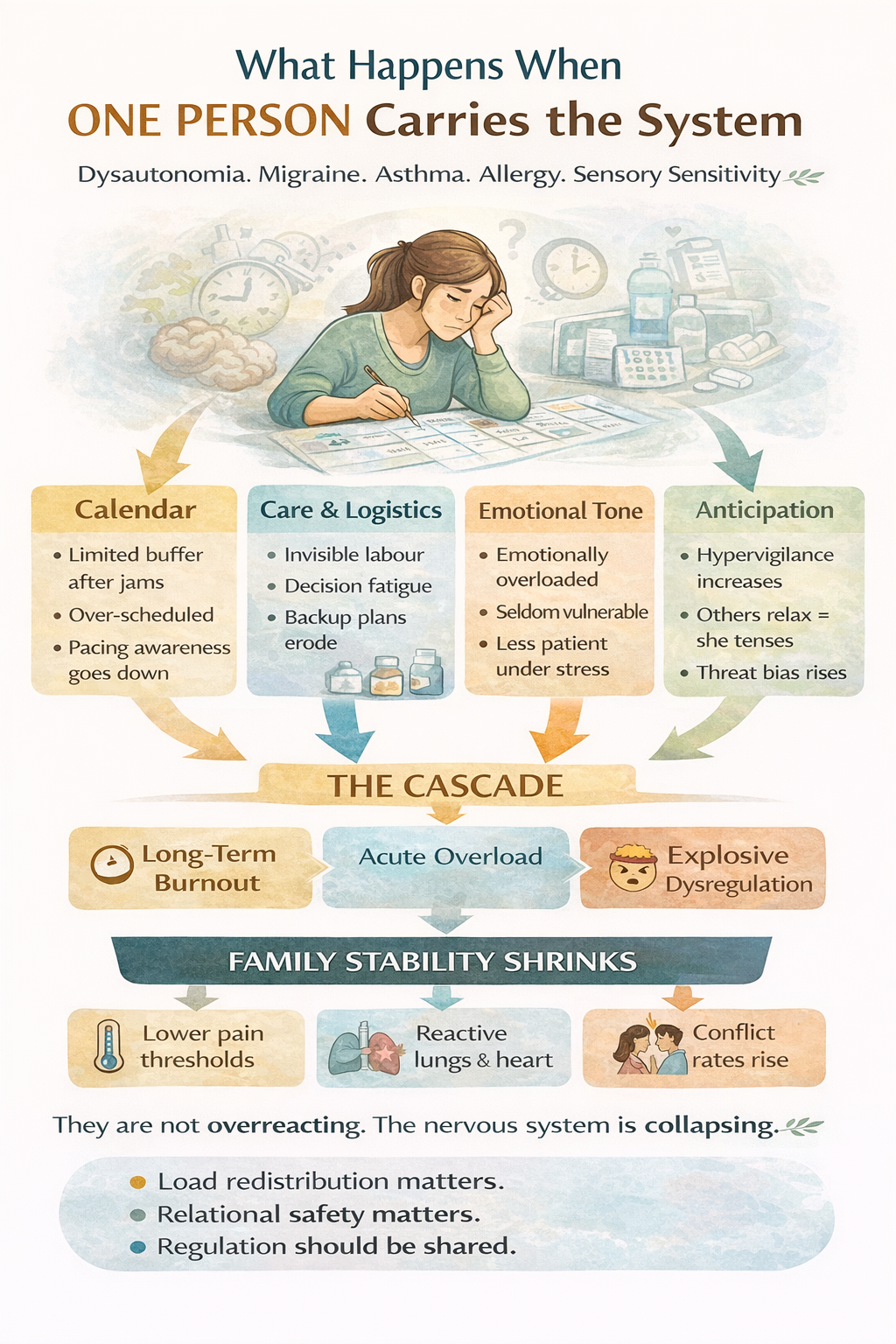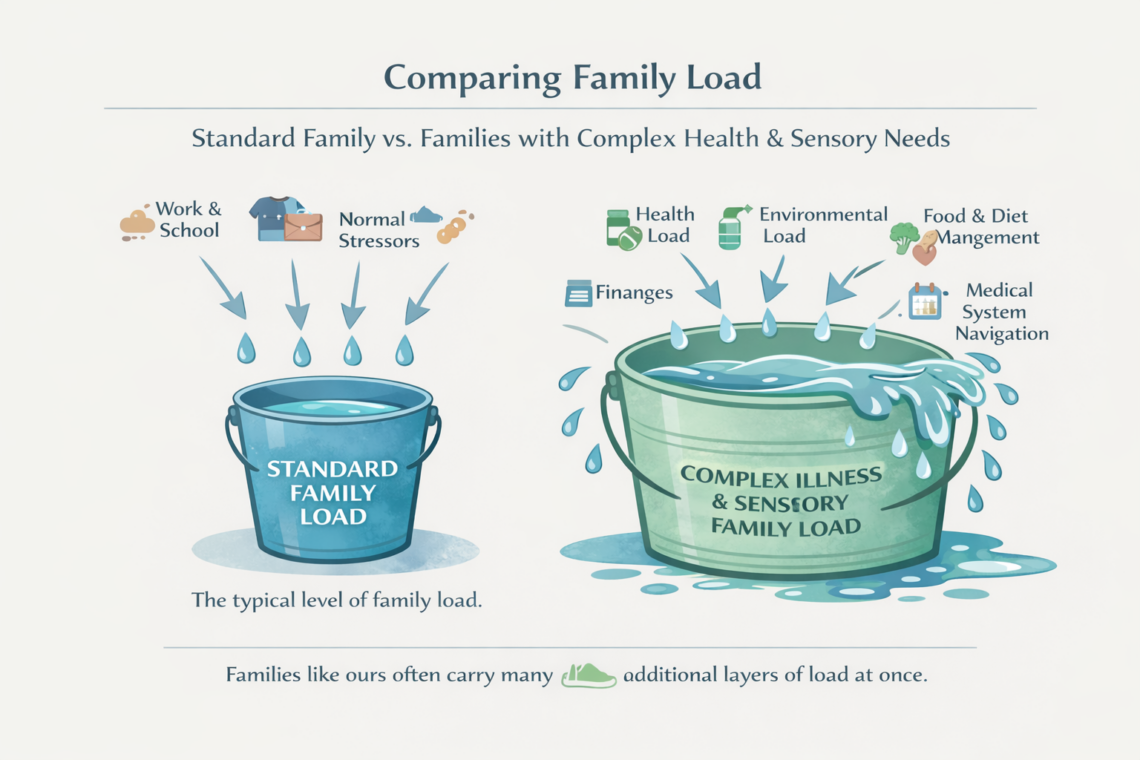
Families function best when load and capacity are reasonably balanced.
This doesn’t mean life is easy.
It simply means the demands placed on the family are within what the family can manage most of the time.
When load stays within capacity, the household tends to feel more stable.
When load consistently exceeds capacity, the family system can begin to struggle.
What Creates Load in a Family
Every family carries some level of load.
This can include:
• work and school commitments
• household tasks
• financial pressures
• emotional support within the family
• caring responsibilities
These are normal parts of family life.
Additional Load in Some Families
Some families carry additional layers of load.
These may include:
• chronic illness
• fatigue and pain
• neurodivergence
• sensory sensitivities
• food intolerances
• environmental triggers
• frequent medical appointments
• navigating complex health systems
When several family members experience these challenges at the same time, the total family load can increase significantly.
Capacity Is What Helps Families Cope
Capacity is what allows a family to manage the load.
Capacity may come from:
• physical health and energy
• supportive relationships
• practical problem-solving skills
• financial resources
• community or disability supports
• predictable routines
• calm environments
Capacity can change over time.
Illness, stress, burnout, or major life events can temporarily reduce how much a family can manage.
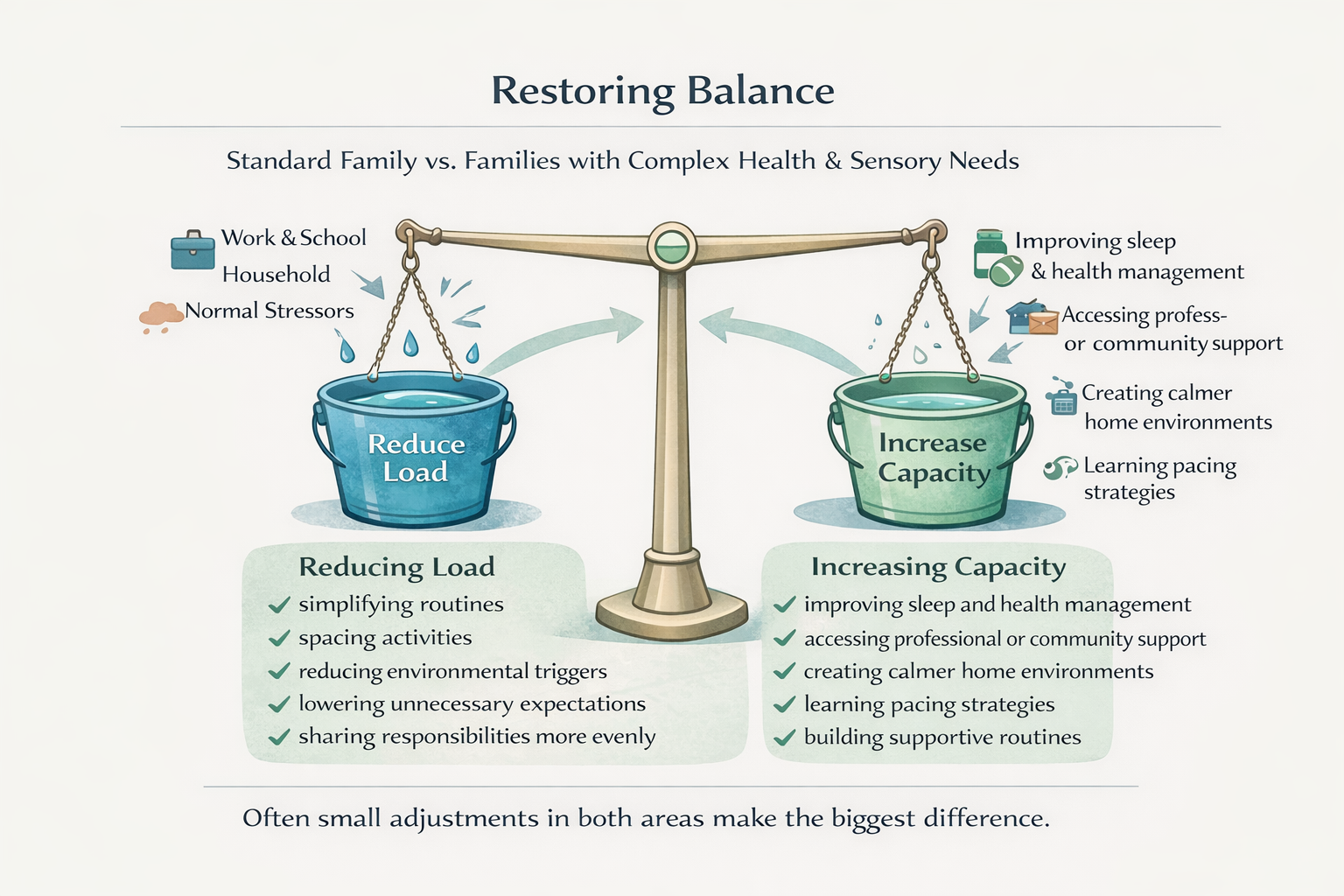
Restoring Balance
When families notice that load has become too high, balance can often be restored in two ways.
Reducing Load
Examples might include:
• simplifying routines
• spacing activities
• reducing environmental triggers
• lowering unnecessary expectations
• sharing responsibilities more evenly
Increasing Capacity
Examples might include:
• improving sleep and health management
• accessing professional or community support
• creating calmer home environments
• learning pacing strategies
• building supportive routines
Often small adjustments in both areas make the biggest difference.
A Helpful Perspective
When a family system becomes overwhelmed, it can be tempting to look for someone to blame.
A load-and-capacity perspective asks a different question:
Is the family carrying more load than it currently has capacity to manage?
This simple shift can make it easier for families to focus on practical solutions rather than personal fault.
A Quiet Goal
Most families do not need perfect solutions.
They simply need the overall load to stay within their capacity most of the time.
Small changes can make that possible.
Families manage life by balancing two things:
Load — the demands placed on the family
Capacity — the resources available to manage those demands
When load stays within capacity, life generally feels manageable.
When load consistently exceeds capacity, the system begins to struggle.