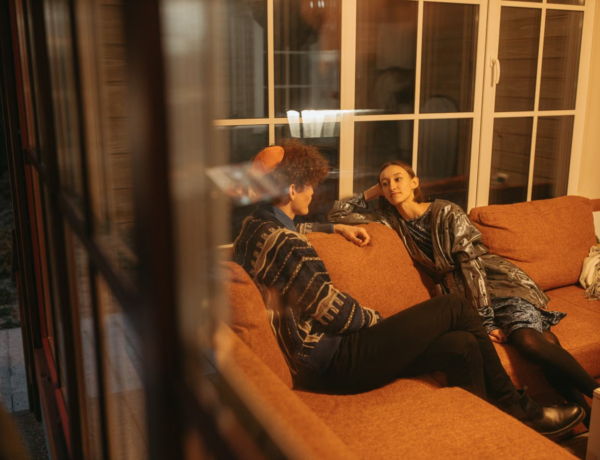
Same Family. Different Experiences.
Family members can share traits, vulnerabilities or health patterns without having the same symptoms, limits or support needs.

- People in the same family can experience the same environment very differently.
- One person may need quiet while another needs movement, company or activity.
- One person may need practical help while another needs independence and space.
- Similar diagnoses do not automatically mean similar support needs.
- Capacity can change, so what worked yesterday may not fit today.
- The aim is not to make everyone need the same thing. It is to find ways for different needs to coexist where possible.
Families often look for patterns.
We notice that several people are sensitive to noise. Or that migraines, fatigue, anxiety, hypermobility, executive-function difficulties or sensory differences seem to run through the family.
Those patterns can be useful.
But they can also create an easy trap: assuming that because two people share a trait, they must experience it in the same way.
Two people can have something important in common and still need very different environments, supports and levels of help.
The same thing can feel very different
Imagine a busy family room.
The television is on. Someone is talking. Another person is moving around. Dinner is being prepared nearby.
One family member may find the room lively and comforting.
Another may be using most of their capacity simply filtering the sound, movement and smells.
Neither experience is necessarily more “correct”.
They are different nervous systems experiencing the same environment differently.
Person A: “I feel better when people are around me.”
Person B: “I cannot think when there are several people talking.”
The family problem is not necessarily deciding who is right.
It may be working out how both needs can be considered.
Differences can show up in many ways
Sensory needs
One person may need quiet and dim light. Another may regulate through music, movement or activity.
Capacity
One person may manage an outing easily while another needs preparation, support and recovery afterwards.
Connection
One person may feel safer talking things through. Another may need space before they can communicate.
Support
One person may want practical help. Another may experience the same help as intrusive.
Even the same diagnosis can look different
Diagnostic labels can help describe broad patterns.
They do not tell us exactly what everyday life is like for a particular person.
Two people with the same diagnosis may differ in:
- sensory sensitivities
- pain or fatigue
- executive-function demands
- communication style
- social energy
- mobility
- sleep
- recovery time
- tolerance for uncertainty
- the amount and type of support that helps
This is one reason functional impact can be more useful than diagnosis alone when a family is trying to understand what someone actually needs.
“What is difficult for you?” is often more useful than “What should someone with this condition be able to do?”

Understanding does not require sameness
Family members do not have to experience something themselves in order to take another person’s experience seriously. Curiosity can be more useful than comparison.
Why comparison can create friction
Families naturally compare.
We may think:
- “I have that too and I can still do it.”
- “You managed this last week.”
- “Your sibling does not need that much help.”
- “Noise bothers me too, but I just ignore it.”
These comparisons often miss important differences.
The people involved may have different baseline capacity, different symptom severity, different sensory profiles, different demands that day or different recovery costs.
“But your sister can manage it.”
Try:
“What makes this harder for you?”
The same person can also be different from day to day
Different needs do not only exist between people.
They can exist within the same person over time.
Someone who could manage a supermarket yesterday may not manage it today because of:
- poor sleep
- pain
- migraine
- fatigue
- sensory overload
- stress
- a demanding appointment earlier in the day
- reduced executive function
That does not necessarily mean the earlier ability was exaggerated or today’s difficulty is inconsistent.
Capacity can be genuinely variable.
What happens when needs genuinely clash?
Sometimes there is no perfect arrangement.
One person needs quiet. Another needs to move around and make noise.
One person wants to talk immediately. Another cannot talk until they have had time alone.
One person needs help. The person who usually helps may also be exhausted.
At that point, the goal may need to change.
Sometimes the realistic goal is to reduce the clash, protect the most important needs and find a workable compromise.
Possible approaches include:
- using different spaces
- taking turns
- changing the timing
- reducing the overall demand
- using headphones, closed doors or quieter alternatives
- asking which need is most urgent today
- getting outside help where available
- accepting a “good enough” solution rather than a perfect one
A quick family check
When people seem to need different things, it can help to ask:
What kind of difference are you trying to work with?
Choose the closest match. This is not about deciding who is right. It is a way to look for the next workable step.
What is happening?
A useful idea to keep
Instead of asking:
“Why can’t we all just do the same thing?”
Try:
“What is each person dealing with, and what would make this situation more workable?”
Fair does not always mean identical
Family members may need different amounts of quiet, help, flexibility, recovery or independence. Responding to those differences can be part of treating people fairly rather than a sign that everyone must be treated exactly the same.