Supporting comfort and regulation for sensitive systems
Some people experience the world more intensely through their senses. Light, sound, touch, smell, or movement can sometimes feel overwhelming or distracting.
This can occur in a range of situations, including:
- sensory processing differences
- migraine
- autism or neurodivergence
- chronic illness and fatigue
- anxiety or stress
For some individuals, sensory modulation tools can help make environments feel calmer and easier to manage.
Within the ALPIMS framework, sensory supports are most closely linked to the Sensory and Autonomic domains, which influence how the nervous system responds to stimulation.
What Are Sensory Modulation Tools?
Sensory modulation tools are simple items that help people adjust sensory input in their environment.
They may help by:
- reducing overwhelming sensory input
- providing calming sensory feedback
- helping the nervous system settle after overload
Different people prefer different tools, and what works well for one person may not work for another.
Common Sensory Modulation Tools
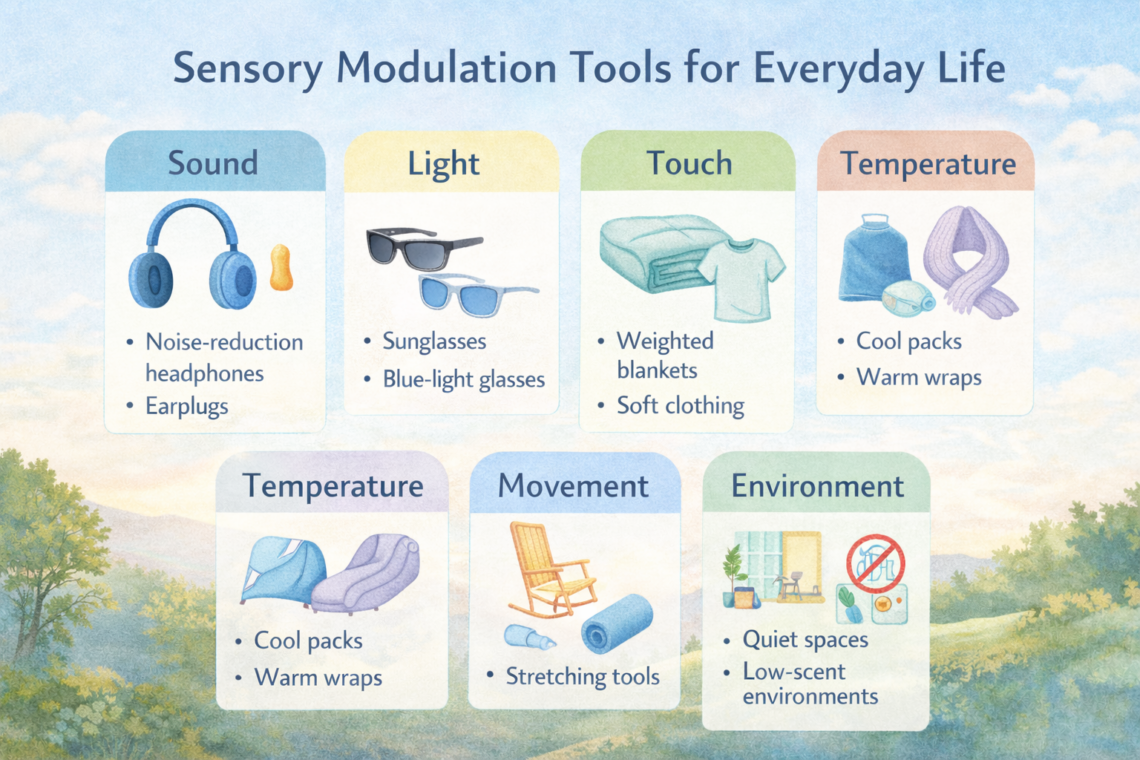
| Category | Examples | Why people use them |
|---|---|---|
| Sound | Noise-reducing headphones, earplugs | Reduce overwhelming background noise |
| Light | Sunglasses, blue-light glasses, dim lighting | Reduce light sensitivity |
| Touch | Weighted blankets, soft clothing, sensory cushions | Provide calming pressure or comfort |
| Temperature | Cool packs, warm wraps | Help regulate body comfort |
| Movement | Rocking chairs, gentle stretching tools | Support calming movement |
| Environment | Quiet spaces, low-scent environments | Reduce sensory load |
Simple Sensory Support Ideas
Some people find it helpful to:
- create quiet recovery spaces at home
- reduce strong lighting or harsh glare
- use noise reduction tools in busy environments
- choose comfortable clothing and textures
- take breaks in calmer environments
These small adjustments can sometimes help the nervous system recover more easily from sensory overload.
Lived Experience
In our family, we found that small sensory supports—such as quiet spaces, softer lighting, and noise-reducing tools—helped create calmer environments during periods of overload or fatigue.
These approaches are not solutions for everyone, but they may be useful options to explore.
Disclaimer
This information is shared for educational purposes and lived experience.
It is not medical advice. People experiencing significant sensory difficulties should consult appropriate health professionals for guidance.