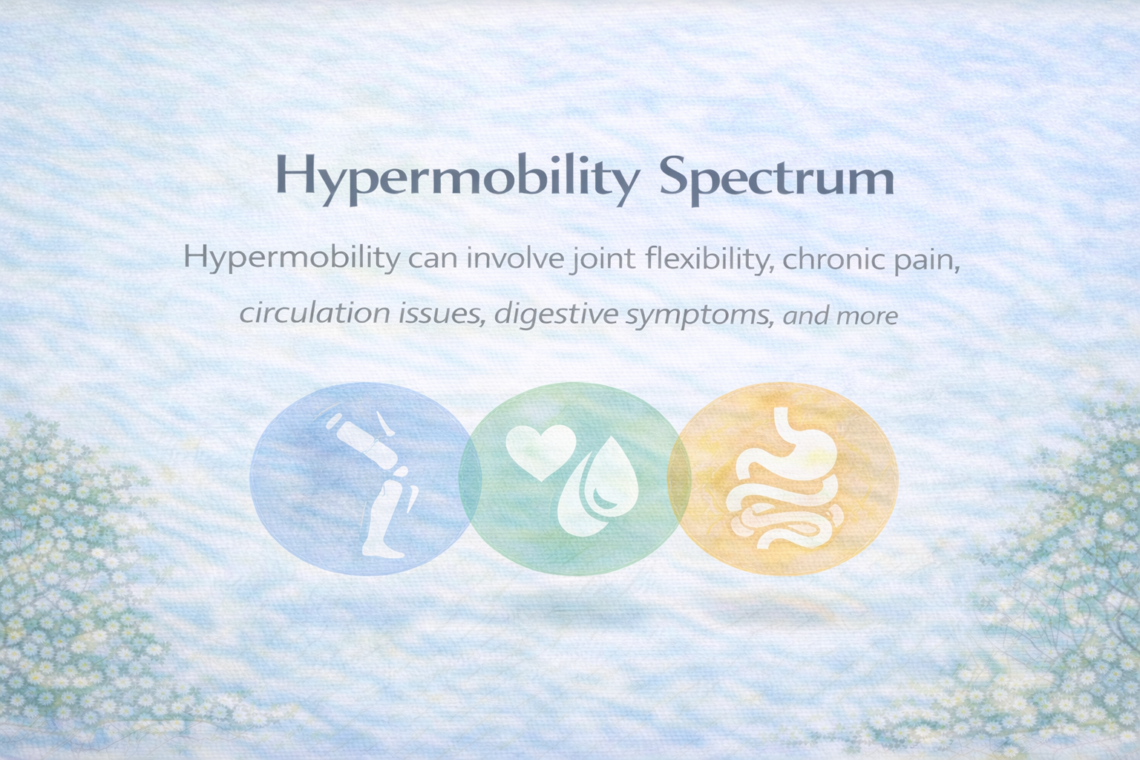
The information on this page reflects lived experience and emerging research on overlapping spectrum conditions. Hypermobility spectrum conditions vary widely between individuals.If symptoms are severe or persistent, guidance from a qualified healthcare professional can be helpful.
Hypermobility
Hypermobility is often associated with very flexible joints, but for many people it can be part of a broader hypermobility spectrum condition.
People on the hypermobility spectrum may experience not only joint flexibility, but also symptoms affecting pain, fatigue, circulation, digestion, and the nervous system.
In our family we noticed that hypermobility sometimes appeared alongside other conditions such as migraine, ME/CFS, fibromyalgia, and autism.
This led us to explore how these conditions might connect through sensitive regulatory systems.
Hypermobility as a Spectrum
Hypermobility can vary widely between individuals.
Some people have flexible joints without symptoms, while others experience a range of health challenges sometimes described as Hypermobility Spectrum Disorders (HSD) or Ehlers-Danlos Syndrome (EDS).
Common features may include:
• flexible or unstable joints
• joint pain or frequent injuries
• muscle fatigue
• dizziness or circulation difficulties
• digestive symptoms
• headaches or migraine
• fatigue or slow recovery after activity
• sensory sensitivity
Because these experiences vary so widely, hypermobility is often described as part of a spectrum.
How Hypermobility Links to ALPIMS
Many hypermobility-related symptoms involve the regulatory systems described in the ALPIMS framework.
Autonomic
Circulation and nervous system regulation can be affected, sometimes leading to dizziness or conditions such as POTS.
Laxity
Connective tissue differences can affect joints, ligaments, blood vessels, and internal organs.
Pain
Joint instability and nervous system sensitivity can contribute to chronic pain.
Immune
Some people experience allergy, mast cell activation, or inflammatory symptoms.
Mood
Living with chronic symptoms can influence emotional resilience and stress responses.
Sensory
Sensory sensitivity can occur alongside hypermobility and related conditions.
Looking at hypermobility through these regulatory systems helped us understand why it sometimes overlapped with other spectrum conditions in our family.
Hypermobility and Overlapping Conditions
Research increasingly shows that hypermobility can occur alongside other conditions such as:
• migraine spectrum disorders
• ME/CFS
• fibromyalgia
• autonomic disorders such as POTS
• autism and sensory processing differences
These overlaps helped us recognise patterns across our own family’s health experiences.
You can read more about this idea on our page about Overlapping Spectrum Conditions.
What Helped in Our Family
Everyone’s experience with hypermobility is different, but some strategies that helped in our family included:
• pacing physical activity
• gentle strengthening exercises
• protecting joints during repetitive tasks
• spacing activities to reduce fatigue
• maintaining supportive routines for sleep and recovery
Small adjustments often made daily life more manageable.
Resources
If you would like to learn more about hypermobility spectrum conditions, these organisations provide helpful information:
• Ehlers-Danlos Society
• Hypermobility Syndromes Association
• EDS Australia