Autism Spectrum
Autism is often described as a spectrum condition, meaning that people may experience a wide range of strengths, sensitivities, and ways of processing the world.
For some people autism is recognised in childhood. For others it may not be identified until adulthood.
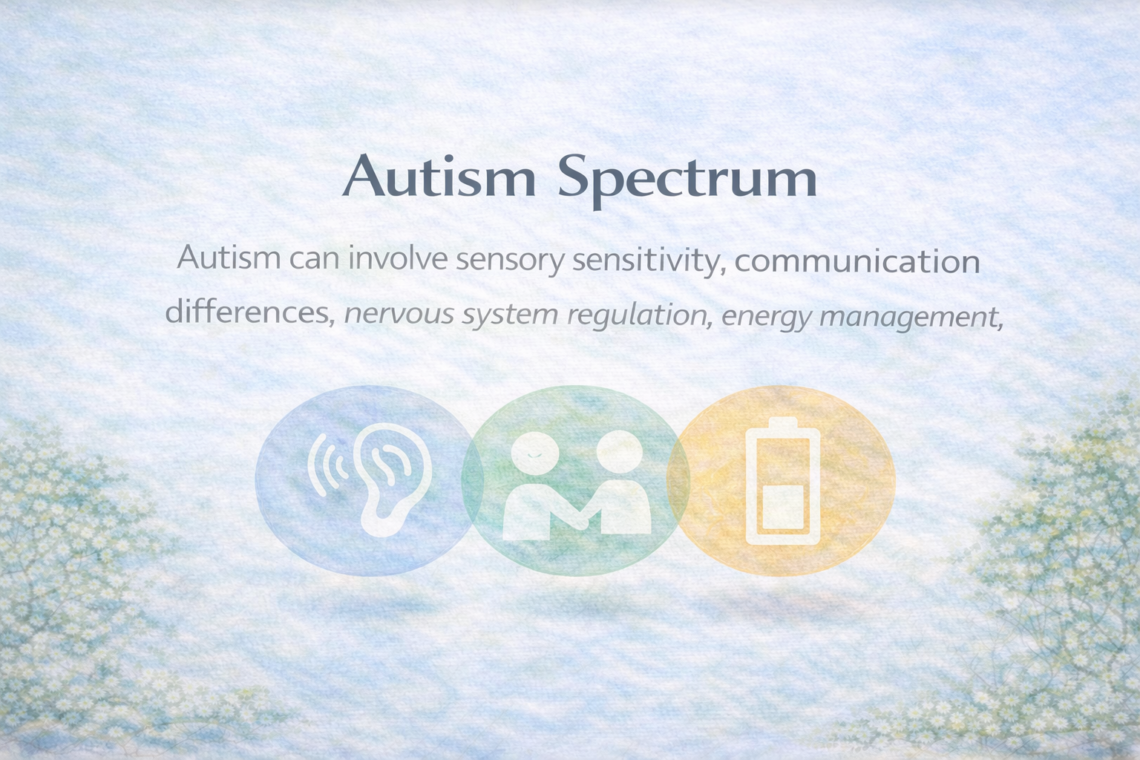
Autism can involve differences in sensory processing, communication styles, nervous system regulation, and energy management.
In our family we noticed that autism traits sometimes appeared alongside other conditions such as migraine, hypermobility, ME/CFS, and fibromyalgia.
This is one reason we began exploring how these conditions might connect through sensitive regulatory systems.
Autism as a Spectrum
Autism affects how a person experiences and processes the world.
Some common features may include:
• sensory sensitivity to sound, light, smell, or touch
• strong focus or deep interests
• differences in social communication
• a need for predictability or routine
• fatigue or burnout after social or sensory demands
• heightened emotional or nervous system responses
Every autistic person is different, which is why autism is described as a spectrum.
How Autism Links to ALPIMS
Many autism-related experiences involve the regulatory systems described in the ALPIMS framework.
Autonomic
The nervous system may react strongly to stress, change, or environmental demands.
Pain
Some autistic people experience altered pain processing or chronic pain conditions.
Immune
Allergy, mast cell activation, or inflammatory responses may occur in some individuals.
Mood
Emotional regulation can be affected by sensory load, fatigue, or nervous system stress.
Sensory
Differences in sensory processing are a core feature of autism.
Looking at autism through these regulatory systems helped us understand why it sometimes appeared alongside other spectrum conditions in our family.
Autism and Overlapping Conditions
Research increasingly shows that autism can occur alongside other conditions such as:
• migraine spectrum disorders
• hypermobility spectrum disorders
• ME/CFS
• fibromyalgia
• POTS or autonomic dysregulation
• sensory processing differences
These overlaps do not occur for everyone, but they helped us recognise patterns across our own family.
You can read more about this idea on our page about Overlapping Spectrum Conditions.
What Helped in Our Family
Everyone’s experience is different, but some simple strategies that helped in our family included:
• reducing sensory overload where possible
• allowing recovery time after busy activities
• spacing activities across the day
• maintaining predictable routines
• creating quiet spaces for nervous system regulation
Small adjustments often made everyday life easier.
Resources
If you would like to learn more about autism, these organisations provide helpful information:
• Autism Research Institute
• Autism Self Advocacy Network
• Autism CRC (Australia)
A Gentle Note
The information on this page reflects lived experience and emerging research about overlapping spectrum conditions.
Autism is a neurodevelopmental difference with many strengths as well as challenges.
If you have concerns about autism or related symptoms, a qualified healthcare or developmental professional can provide guidance.