When the world suddenly feels like “too much”
There was a time when environmental exposures seemed to trigger symptoms everywhere.
Perfumes could cause headaches.
Cleaning products irritated the eyes or skin.
New furniture smells made rooms uncomfortable to sit in.
Sometimes even walking into a busy shop or supermarket aisle felt overwhelming.
At first it seemed obvious that the problem must be chemicals or toxins in the environment.
Environmental illness was the explanation that appeared to fit best.
Like many people navigating this space, I was at one stage told that my symptoms might be due to toxic injury. That explanation can feel validating, because it recognises that the symptoms are real. At the same time, it can also be frightening, because it can make it seem as though the body has been permanently damaged.
Over time, however, another piece of the puzzle began to emerge — the role of central sensitisation and nervous system sensitivity.
Understanding this helped make sense of why symptoms could appear across so many different systems at once.
When the Nervous System Becomes More Sensitive
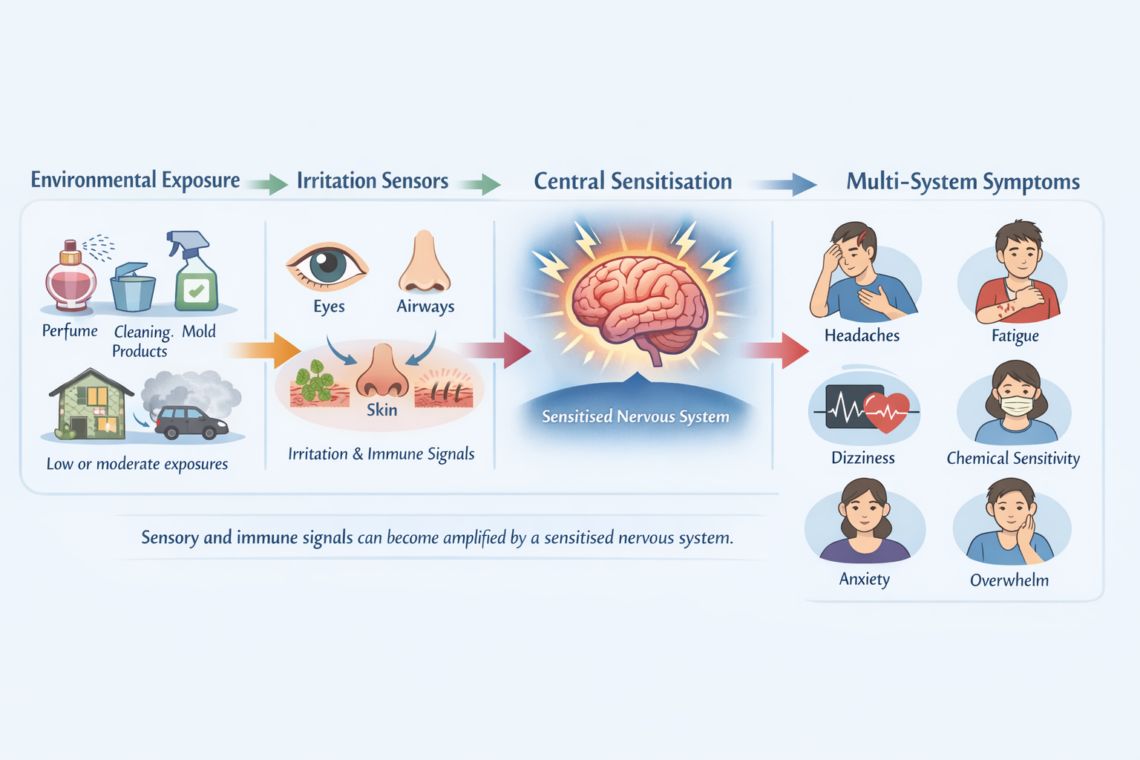
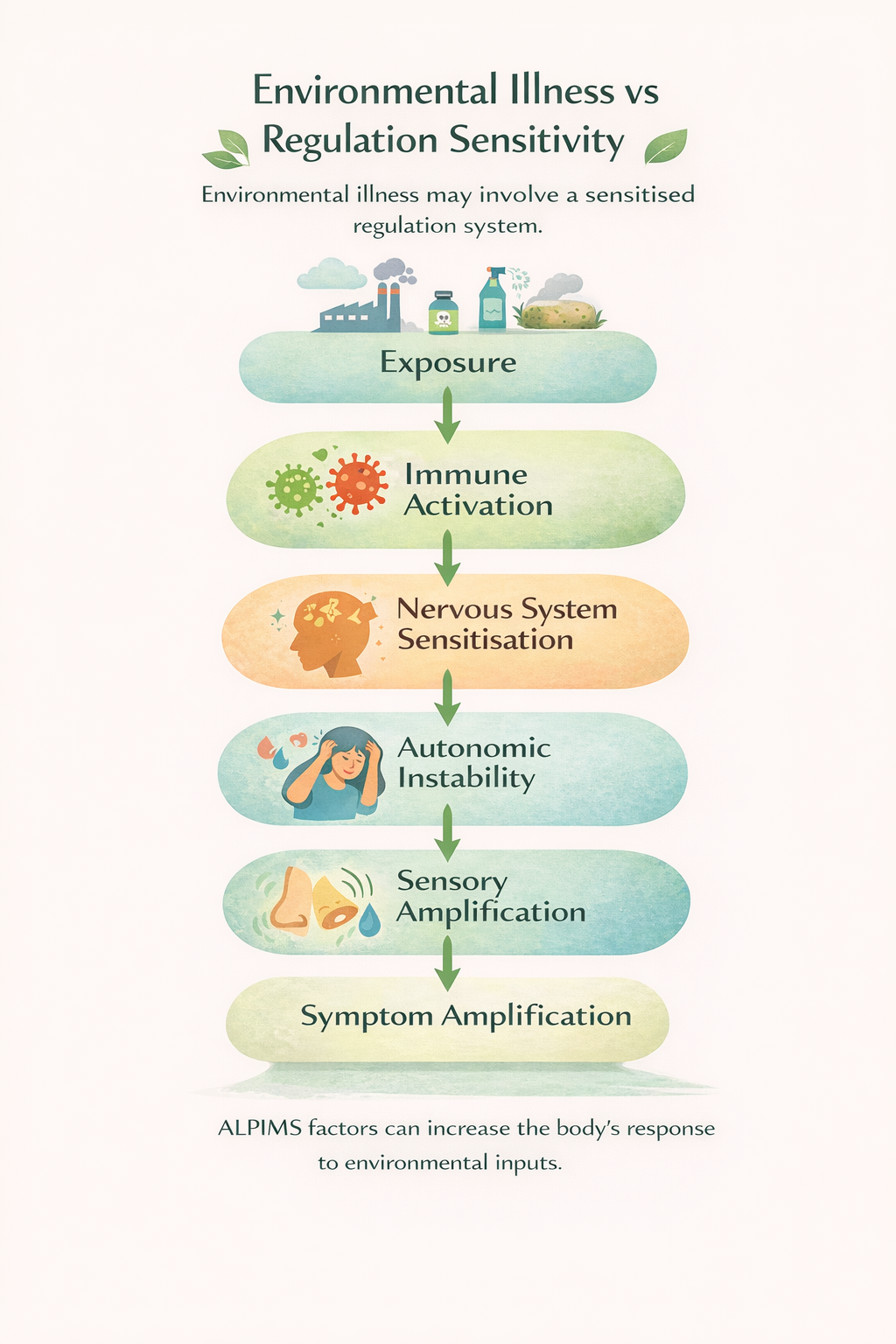
Central sensitisation occurs when the brain and spinal cord become more responsive to signals from the body and the environment.
Normally the nervous system filters huge amounts of sensory information every day without us noticing.
But when sensitisation develops, that filtering system becomes less effective.
Signals that were once mild or barely noticeable can begin to feel much stronger or uncomfortable.
This can affect many types of sensory input:
• smells
• light
• sound
• touch
• temperature
• chemical irritation signals
The nervous system’s protective alarm system becomes much easier to trigger.
Why Environmental Exposures Can Cause Irritation
The body has several systems designed to detect potentially harmful exposures.
These include:
• the trigeminal nerve in the eyes and face
• airway sensory nerves
• skin sensory receptors
• mast cells and immune signalling
• autonomic nervous system responses
These systems normally help protect us from harmful environments.
But when the nervous system becomes sensitised, these warning systems can begin to react more strongly than they used to.
This can produce symptoms such as:
| Area affected | Common symptoms |
|---|---|
| Eyes | burning, watering, irritation |
| Skin | itching, tingling, redness |
| Nose / sinuses | congestion, burning |
| Airways | cough, throat irritation |
| Nervous system | headaches, dizziness, fatigue |
These reactions are real physiological responses, even when exposure levels are relatively low.
How Sensitivity Sometimes Begins
For many people, environmental sensitivity does not appear suddenly without a reason.
Often there has been some form of stress or strain on the body beforehand.
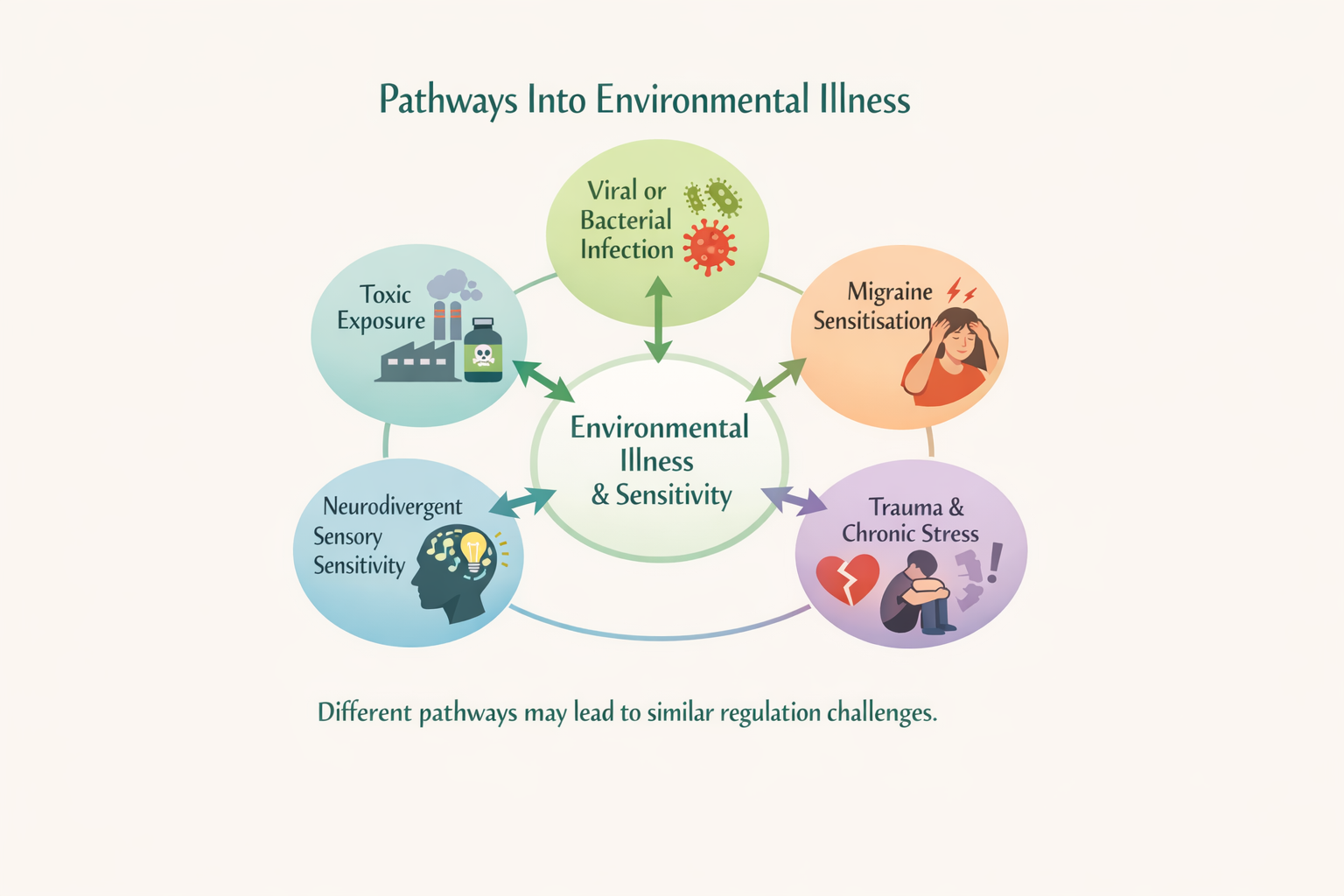
Different people describe different starting points.
These can include:
• infections or viral illness
• periods of prolonged stress or burnout
• environmental exposures
• injury or surgery
• long periods of physical or emotional overload
After an event like this, the nervous system may become more alert and reactive.
Things that were once tolerated may suddenly begin triggering symptoms.
This can make it feel as though the body has become sensitive to the environment itself.
What About Toxic Injury?
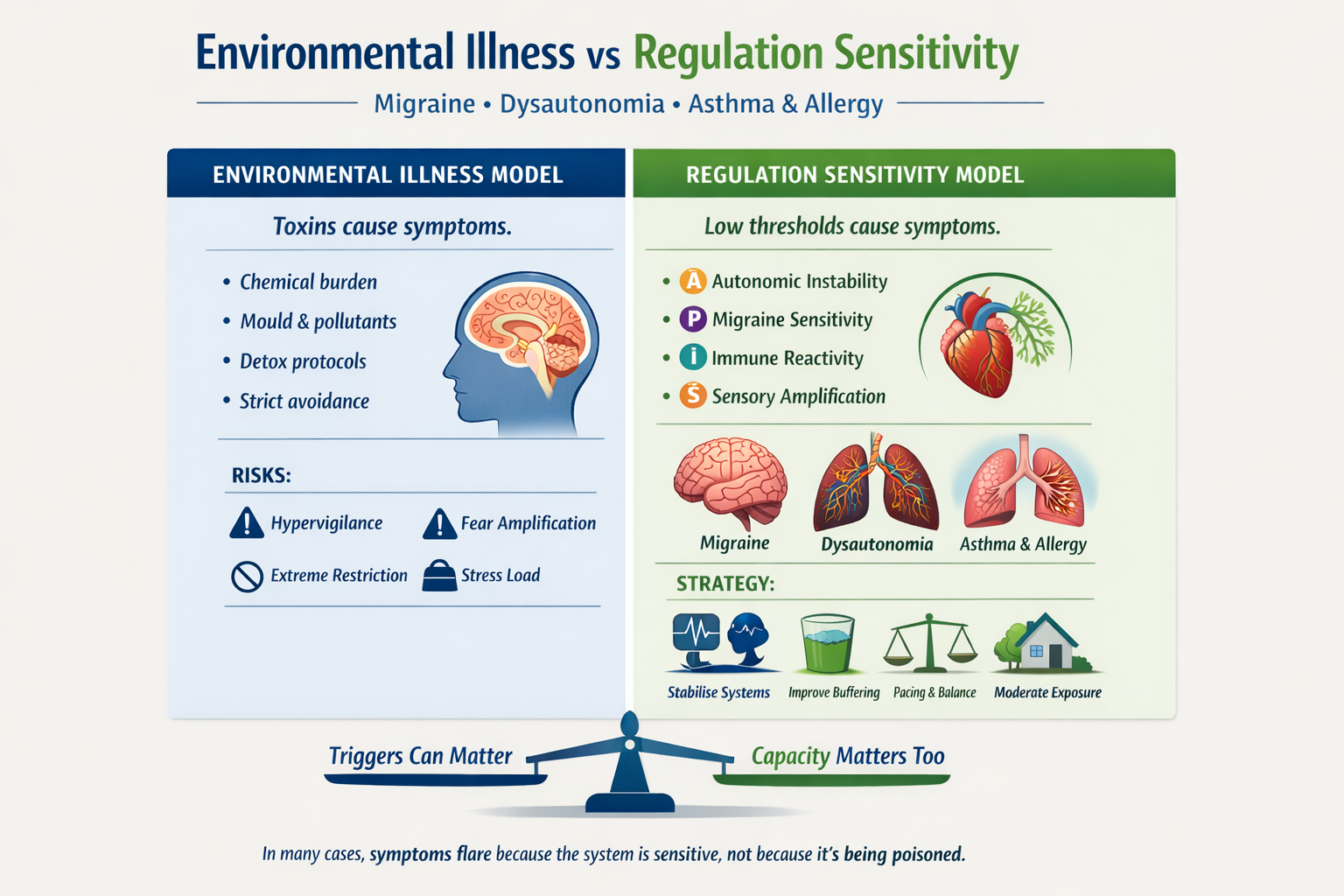
When symptoms are triggered by environmental exposures, it is natural to wonder whether the body has been injured by toxins or chemicals.
In some situations this can happen.
Significant exposures — such as occupational chemical exposure, pesticide exposure, mold contamination, or pollution events — can sometimes lead to toxic injury or inflammatory responses.
When this occurs, identifying and reducing the exposure source is important.
However, many people who develop environmental sensitivity do not have clear evidence of ongoing toxic poisoning.
Instead, symptoms may be related to a combination of:
• nervous system sensitisation
• immune system reactivity
• sensory amplification
• reduced physiological capacity after illness or stress
These mechanisms can make the body much more reactive to everyday exposures, even when toxin levels are low.
The Role of Detox Protocols
Because environmental illness has often been framed as toxic overload, many people are encouraged to follow detox programs.
These can include approaches such as:
• detox supplements
• binding agents
• restrictive diets
• sauna or sweating protocols
• various cleansing programs
Some people report benefits from certain strategies, particularly when they support general health, hydration, circulation, and nutrient balance.
However, detox approaches can sometimes become very restrictive or stressful, especially when they involve:
• extreme dietary restriction
• large numbers of supplements
• fear of everyday environments
• aggressive detoxification strategies
For people whose nervous system is already sensitised, this kind of approach can sometimes increase stress and symptom monitoring, which may unintentionally worsen sensitivity.
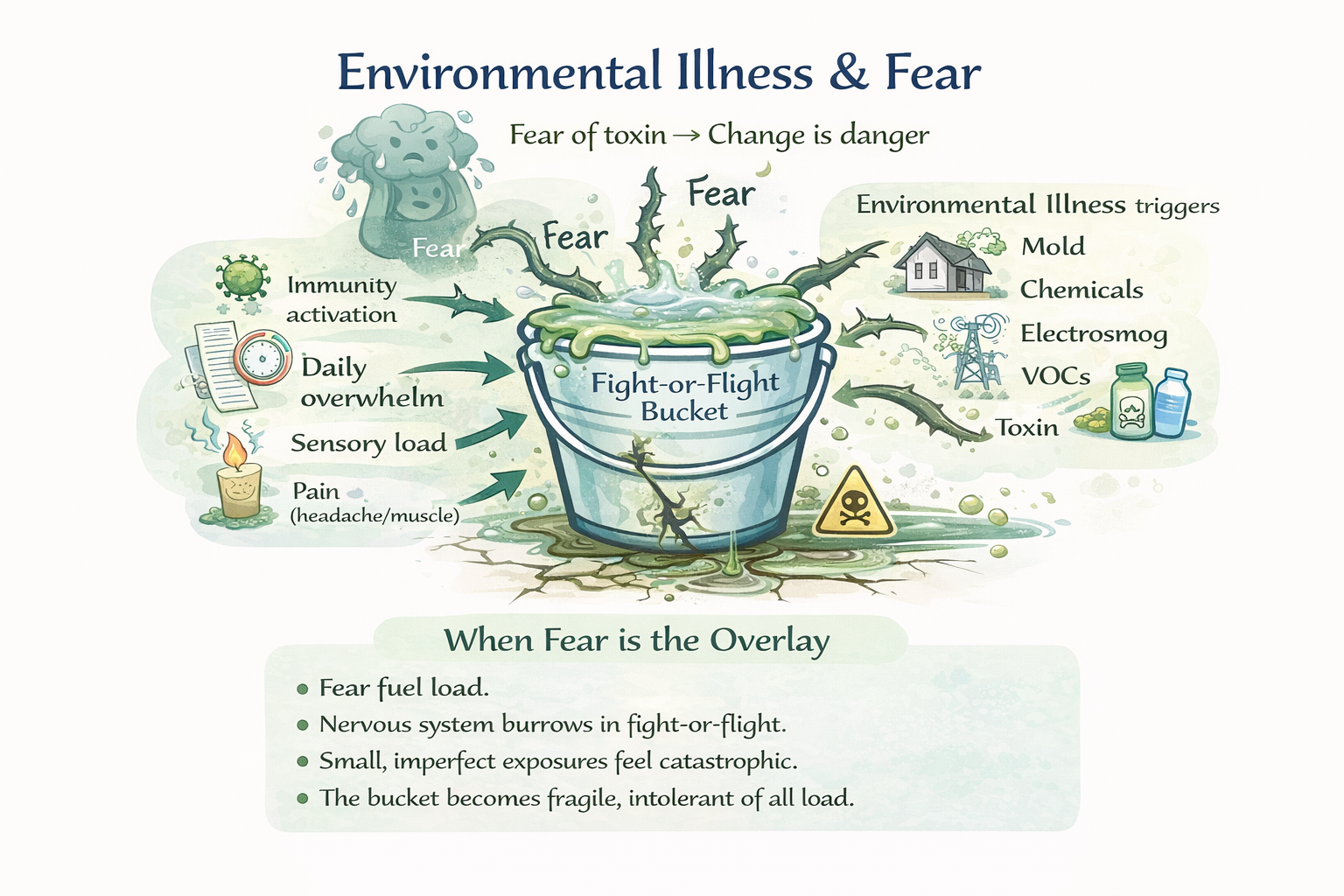
A Load and Capacity Perspective
One idea that helped make sense of environmental sensitivity was the load and capacity model.
The body has a certain amount of capacity to regulate stress, illness, sensory input, and environmental exposures.
When that capacity is reduced — through illness, burnout, trauma, infections, or long periods of overload — tolerance to everyday exposures can drop.
Things that were once manageable may suddenly begin triggering symptoms.
Improvement then becomes less about eliminating every possible trigger and more about gradually rebuilding the body’s regulatory capacity.
Through the ALPIMS Lens
Environmental sensitivity often affects several regulation systems at the same time.
Within the ALPIMS framework (Autonomic, Laxity, Pain, Immune, Mood, Sensory) this may include:
| Domain | Possible effects |
|---|---|
| Autonomic | dizziness, heart rate changes, temperature instability |
| Laxity | joint instability increasing pain sensitivity |
| Pain | migraines, headaches, body pain |
| Immune | mast cell activation patterns |
| Mood | anxiety, overwhelm |
| Sensory | smell, light and sound sensitivity |
Seeing symptoms through this lens can help explain why environmental illness can feel complex and unpredictable.
Finding a More Balanced Approach
At one stage it may feel as though avoiding exposures is the only solution.
But focusing only on avoidance can gradually make life smaller.
Over time many people find that a more balanced approach helps.
This may include:
• reducing the strongest triggers
• improving sleep and routine
• supporting nutrition and hydration
• pacing activity
• calming the nervous system
• slowly rebuilding tolerance
These changes rarely solve everything immediately.
But together they can help increase capacity and reduce reactivity over time.
A Gentle Reframe
One of the hardest parts of environmental illness is feeling that the world itself has become unsafe.
Understanding central sensitisation offers another way of looking at the situation.
Instead of the body being permanently damaged, it may sometimes be more accurate to think of the nervous system as overprotective and highly alert.
And when regulation improves, that alarm system can gradually become less reactive again.
Key idea
Environmental sensitivity can sometimes reflect a sensitised nervous system interacting with sensory and immune systems, rather than permanent toxic injury.
Supporting regulation and gradually rebuilding capacity may slowly improve tolerance again.