Practical Regulation Supports for Multi-System Sensitivity
When the nervous system is overloaded, everything feels louder.
Pain increases.
Sensitivity rises.
Tolerance drops.
Fear grows.
This page offers simple tools to calm the system and rebuild capacity.
These tools support:
• Migraine threshold stability
• Dysautonomia regulation
• Mast cell reactivity patterns
• Sensory overload
• Stress amplification
• ALPIMS multi-domain instability
They are not cures.
They are stabilisers.
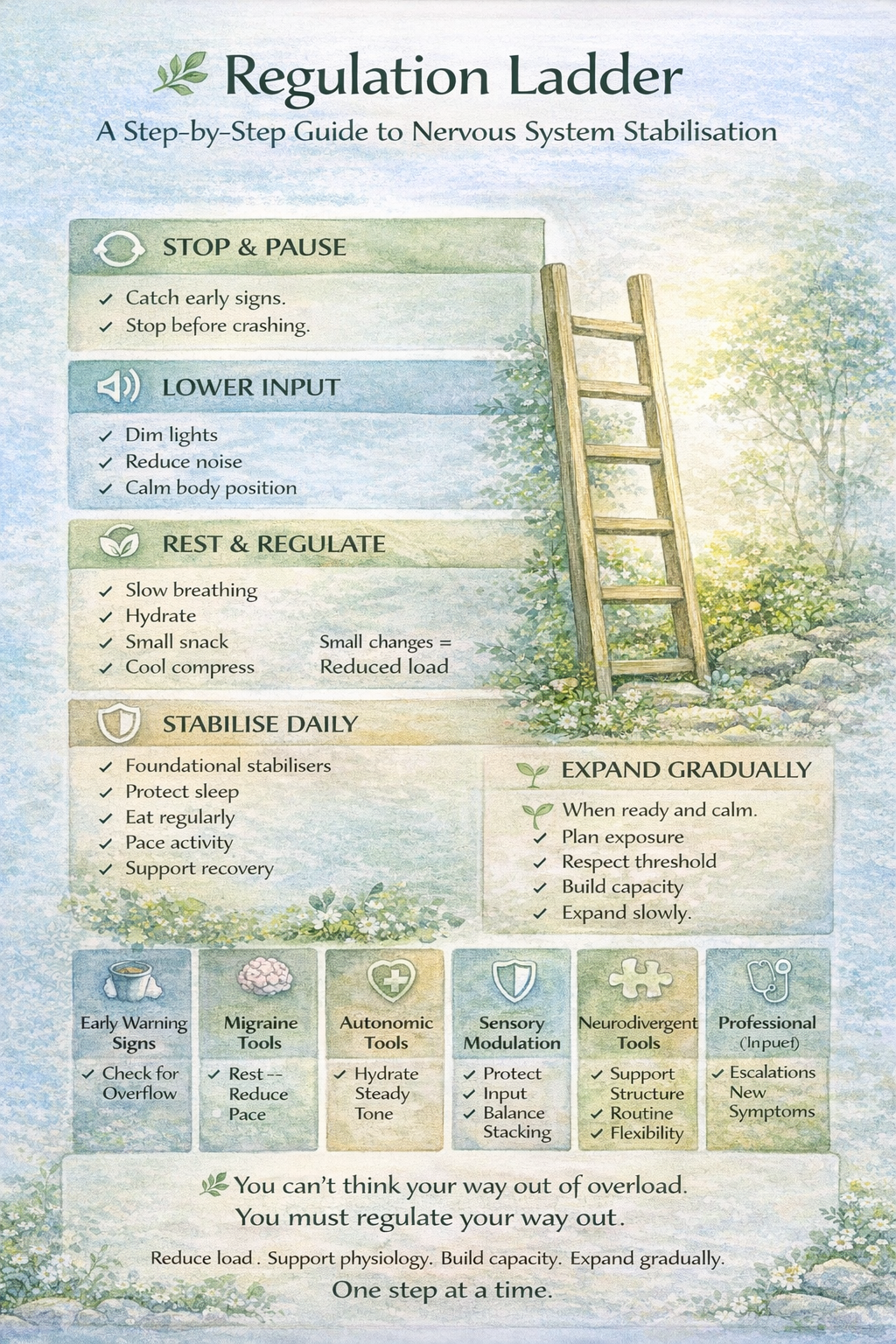
First Principle: Regulate Before You Problem-Solve
When overwhelmed:
Do not analyse triggers first.
Do not escalate restriction.
Do not search for new toxins.
Regulate first.
A calmer nervous system sees more clearly.
Early Warning Signs Checklist
Before overflow, there are signals.
Common early signs:
• Neck tightness
• Light sensitivity
• Irritability
• Brain fog
• Heart rate changes
• Temperature shifts
• Smell sensitivity
• Food aversion
• Sleep disturbance
Catching symptoms early prevents escalation.
Fast Regulation Tools (5–10 Minutes)
Use when symptoms are rising.
• Dim lights
• Reduce noise
• Slow breathing (longer exhale than inhale)
• Lie flat if orthostatic
• Drink fluids
• Eat a small protein + carb snack
• Cool compress on head or neck
These lower autonomic load.
Small changes matter.
Foundational Stabilisation Tools
These protect daily capacity.
• Protect sleep time
• Regular meals
• Hydration with electrolytes if needed
• Gentle movement within threshold
• Limit stacking of intense activities
• Build decompression time into day
Small, steady regulation across domains works better than extreme correction in one area.
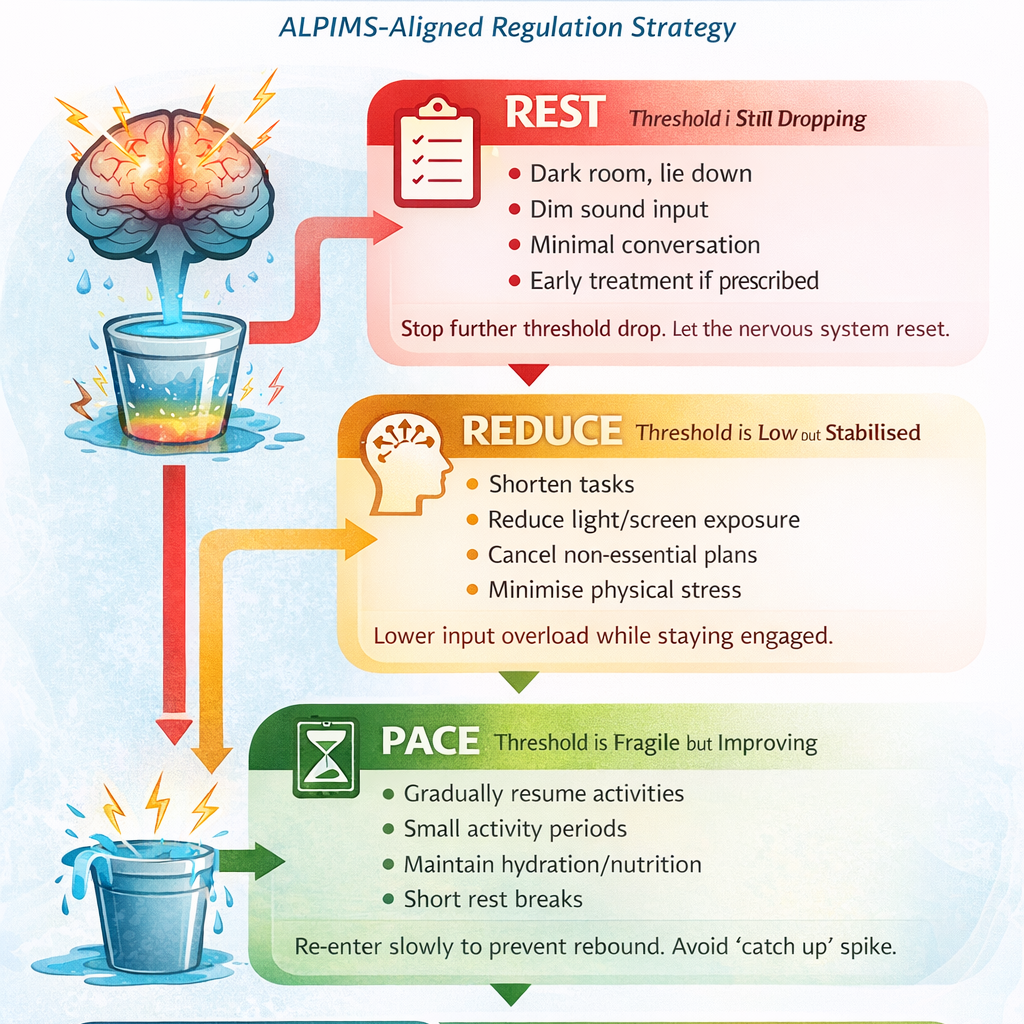
Migraine-Specific Tools
For migraine patterns:
• Treat early
• Darkened room during attack
• Avoid screen exposure
• Use noise reduction
• Rest during postdrome
• Avoid “push through” recovery
Rest–Reduce during attack.
Pace during recovery.
Expand during stability.
Neurodivergence-Sensitive Tools
For neurodivergent systems:
• Predictable routines
• Clear daily structure
• Planned transitions
• Sensory-safe spaces
• Pre-exposure planning
• Recovery scheduling
Structure supports regulation.
Flexibility should be gradual and planned.
Autonomic Stabilisation
Helpful for dysautonomia patterns:
• Hydration
• Salt support (if medically appropriate)
• Avoid rapid position changes
• Compression garments (if prescribed)
• Pacing physical activity
• Avoiding sudden exertion spikes
Stabilising autonomic tone often lowers anxiety automatically.
Sensory Stacking Reduction
Load stacks quietly.
Reduce:
• Bright lights + loud noise together
• Social stress + hunger
• Sleep loss + overexertion
• Multiple changes in one day
Spread demands across time.
Capacity changes daily.
Regulation Loop Breaker
When you feel stuck:
- Pause
- Lower sensory input
- Breathe slowly
- Hydrate
- Eat if needed
- Reduce demands
- Reassess later
This prevents escalation into fear-driven decisions.
🌿 When to Seek Professional Support
Nervous system tools support regulation.
They do not replace medical care.
Seek professional input if:
• Symptoms are escalating rapidly
• New neurological symptoms appear
• Severe autonomic instability
• Anaphylaxis
• Significant weight loss
• Persistent depression
Regulation tools are stabilisers, not substitutes.
🌿 The Core Reminder
You cannot think your way out of overload.
You must regulate your way out.
Reduce load.
Support physiology.
Build capacity.
Expand gradually.
One step at a time.