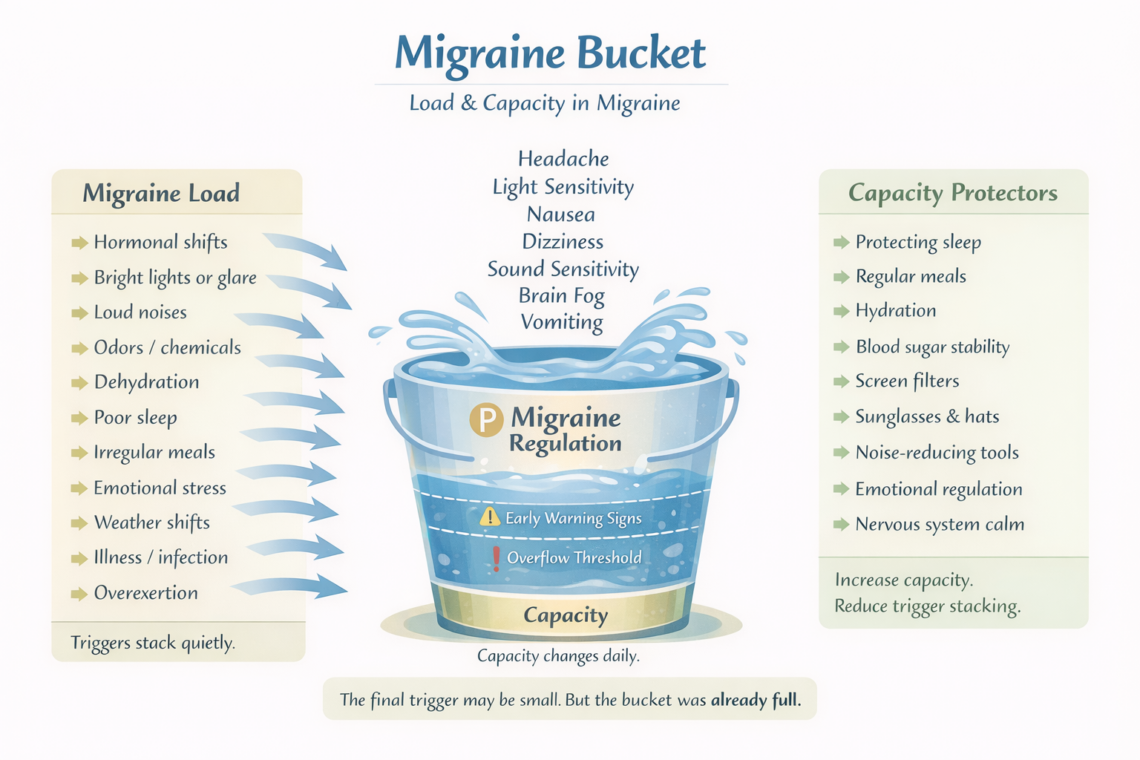
Migraine Spectrum
Migraine is often described as a severe headache disorder, but for many people it involves much more than head pain.
Migraine can affect the nervous system, sensory processing, energy regulation, and blood vessel function. Because of this, migraine is sometimes considered a whole-body neurological condition rather than simply a headache.
For some people, migraine becomes an early clue that the body’s regulatory systems are particularly sensitive.
Common Migraine Symptoms
Migraine symptoms can vary widely between individuals, but often include:
• head pain or pressure
• sensitivity to light, sound, or smell
• nausea or digestive discomfort
• dizziness or balance changes
• fatigue or brain fog
• visual disturbances such as aura
Some people experience migraines occasionally, while others develop chronic migraine patterns.
Migraine and Overlapping Conditions
Migraine often appears alongside other conditions that involve sensitive regulatory systems.
Some commonly overlapping conditions include:
• ME/CFS (chronic fatigue syndrome)
• fibromyalgia spectrum
• hypermobility spectrum differences
• POTS and other autonomic symptoms
• autism and sensory processing differences
• allergy and asthma
Recognising these overlaps can help people make sense of complex health patterns where several conditions appear together.
Migraine as a Gateway Condition
In our experience, migraine became a gateway condition that helped us recognise broader patterns of regulation sensitivity.
Migraine involves several body systems that also appear in other overlapping conditions, including:
• nervous system regulation
• pain signalling pathways
• sensory processing
• immune and inflammatory responses
• energy metabolism
Seeing how these systems interact in migraine can help explain why multiple conditions sometimes occur together.
Migraine and the ALPIMS Framework
The ALPIMS framework describes six regulatory domains that often interact in people with sensitive systems.
Migraine commonly involves several of these domains:
A — Autonomic
Changes in blood flow, dizziness, and nervous system regulation.
P — Pain
Migraine headaches and related pain conditions.
I — Immune
Inflammatory responses and allergy-related patterns.
M — Mood
Stress regulation and neurological chemistry.
S — Sensory
Sensitivity to light, sound, smell, and sensory input.
Understanding migraine through this broader lens can help explain why it sometimes overlaps with other conditions.
Learning More About Migraine
If you would like to explore migraine in more detail, the following organisations provide reliable information:
• American Migraine Foundation
• Migraine Australia
• National Institute of Neurological Disorders and Stroke
• NHS Migraine Resources
A Lived Experience Perspective
This site explores migraine not only as a medical condition, but also as part of a wider pattern of regulatory sensitivity.
Our goal is to share observations and ideas that may help people better understand the connections between migraine and other overlapping conditions.