Two types of Sound Sensitivity?
Fear Based or Neurological
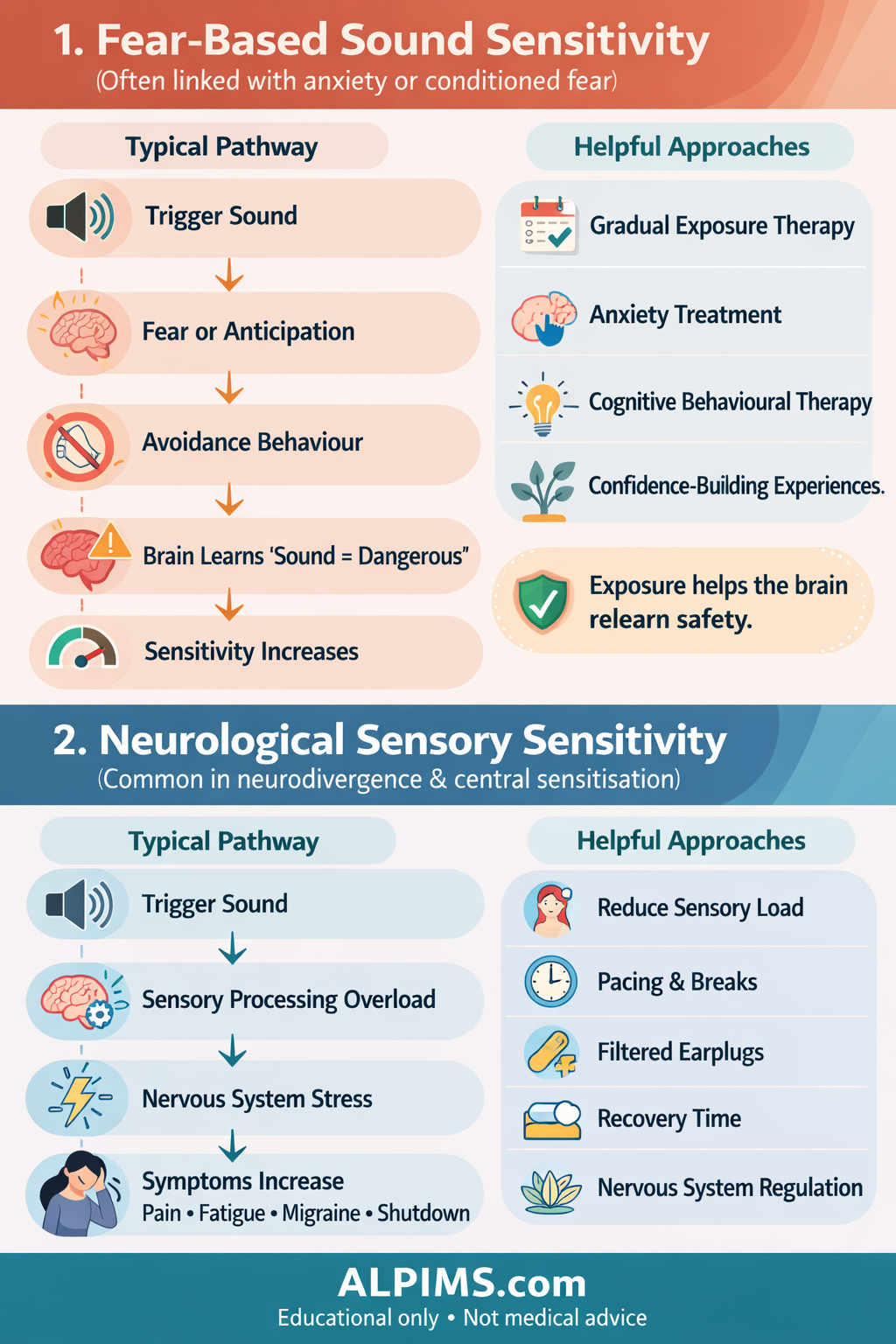
1. Fear-Based Sound Sensitivity
(Often linked with anxiety or conditioned fear)
Typical pathway
Trigger sound
⬇
Fear or anticipation
⬇
Avoidance behaviour
⬇
Brain learns the sound is “dangerous”
⬇
Sensitivity increases
Helpful approaches
• gradual exposure therapy
• anxiety treatment
• cognitive behavioural therapy
• confidence-building experiences
Exposure can help the brain relearn safety.
2. Neurological Sensory Sensitivity
(Common in neurodivergence and central sensitisation conditions)
Typical pathway
Trigger sound
⬇
Sensory processing overload
⬇
Nervous system stress response
⬇
Symptoms increase (pain, fatigue, migraine, shutdown)
This may occur in conditions such as:
- Autism Spectrum Disorder
- Migraine
- Fibromyalgia
- Myalgic Encephalomyelitis/Chronic Fatigue Syndrome
- Hyperacusis
Helpful approaches
• reducing sensory load
• pacing stimulation
• filtered earplugs or noise reduction
• recovery time after stimulation
• nervous system regulation strategies
The goal is supporting regulation rather than forcing exposure.
A Balanced Approach
For many people the most helpful strategy is:
Reduce overload → stabilise the nervous system → gradually build tolerance
This approach is sometimes called sensory pacing or regulation-first exposure.
This information is provided for general education and lived-experience sharing. It is not medical advice and individual needs may vary.
The goal is not complete silence but lowering the overall sensory load on the nervous system.
Below are common sound-reduction approaches that many people find helpful.
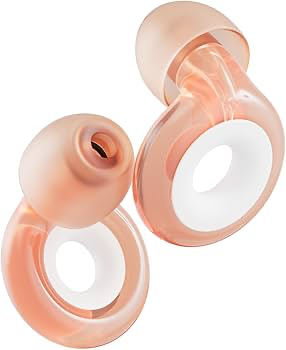
1. Filtered Earplugs
These reduce sound intensity without blocking everything.
Examples:
- Loop earplugs
- Flare Audio Calmer
- Etymotic high-fidelity earplugs
Helpful for:
- shops
- restaurants
- school or work environments
- travel
These reduce background noise while keeping speech audible.
2. Noise-Cancelling Headphones
Active noise-cancelling (ANC) headphones reduce constant background noise such as engines or air-conditioning.
Examples:
- Sony WH‑1000XM5
- Bose QuietComfort Ultra
- Apple AirPods Pro
Helpful for:
- planes and trains
- busy offices
- study or work environments
- sensory recovery time
Many people with sensory sensitivity use these without music just to reduce noise.
3. Soft Furnishings That Absorb Sound
Hard surfaces reflect sound. Soft materials absorb it.
Helpful additions in a room:
- rugs or carpets
- curtains
- upholstered furniture
- wall hangings
- bookshelves
These reduce echo and sound amplification, which can make environments feel calmer.
4. Acoustic Panels
Acoustic panels absorb sound waves and reduce echo and noise buildup.
They are commonly used in:
- therapy rooms
- recording studios
- classrooms
But they are increasingly used in sensory-friendly homes and offices.
5. White Noise or Gentle Background Sound
Some people find that consistent background sound reduces the impact of sudden noises.
Examples:
- white noise
- brown noise
- rainfall sounds
- fans or air purifiers
This can help:
- sleep
- concentration
- reduce startle responses
6. Creating Quiet Zones
Many neurodivergent people benefit from having one predictable low-noise space.
Features might include:
- dim lighting
- minimal electronics
- soft furnishings
- sound-reducing door seals
- calming sensory objects
This allows the nervous system to recover after sensory load.
7. Reducing Sudden Noise Triggers
Small environmental changes can reduce noise spikes.
Examples:
- soft-close cupboard hinges
- felt pads on chairs
- quieter kitchen appliances
- rubber mats under noisy items
These reduce the sharp sounds that often trigger sensory overload.
8. Planning Low-Noise Times
Scheduling activities during quieter periods can help.
Examples:
- shopping early morning
- working during quieter hours
- choosing quieter cafes or seating areas
This is often easier than trying to tolerate noisy environments.
Reducing Sound Load
For people with sensory sensitivity, lowering background noise can reduce nervous system stress.
Small adjustments such as filtered earplugs, noise-cancelling headphones, softer room materials, and quiet spaces can make everyday environments easier to tolerate.