For a long time I didn’t realise how much energy sensory processing was using.
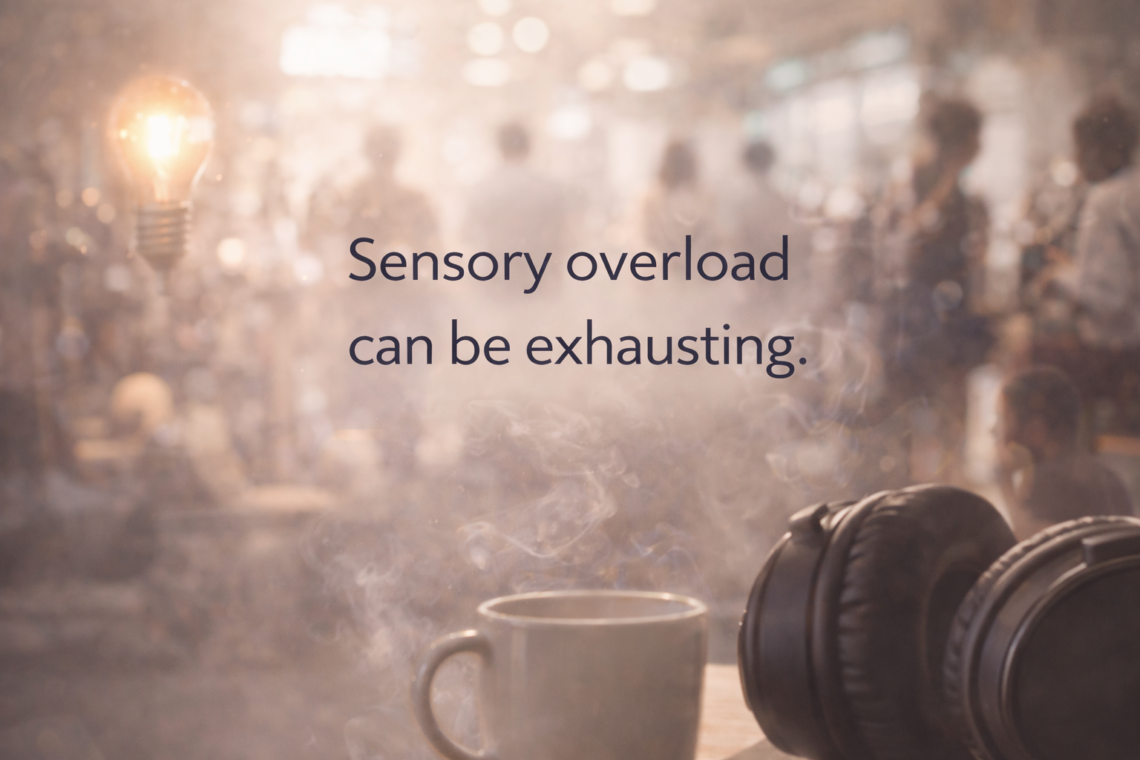
Busy environments meant my brain was constantly filtering noise, movement, conversation, lights, and activity.
Even when I looked calm on the outside, my nervous system was working very hard in the background.
Over time I began to notice that busy or stimulating environments could leave me feeling deeply tired.
Creating quieter spaces and reducing sensory load helped my system recover much more easily.
Why recovery time helps
When the nervous system has been processing a lot of sensory input, it may need time to settle again.
Quieter environments, reduced stimulation, and gentle rest can allow the brain to recover.
Some people find it helpful to include:
• quiet breaks during the day
• time in calm environments
• spacing social or busy activities
• reducing overall sensory load
Over time, these small adjustments can help the nervous system maintain better balance.
Why the brain uses more energy
Many people with sensitive nervous systems process sensory information very intensely.
Sounds, lights, movement, conversation, and other environmental signals can all reach the brain at the same time.
The brain normally filters much of this automatically.
For some people, that filtering system works differently.
This means the brain may need to actively process more information, which uses more energy.
Over time, this extra processing can contribute to fatigue.
Why busy environments can be draining
Busy places often contain many layers of sensory input.
For example:
• multiple conversations
• background noise
• bright lighting
• movement and visual activity
• decision-making and social interaction
Even when a person appears calm, their nervous system may be working very hard to manage all of this information.
After a while, the brain may simply run out of available energy.
This is why busy environments can sometimes leave people feeling unusually tired.