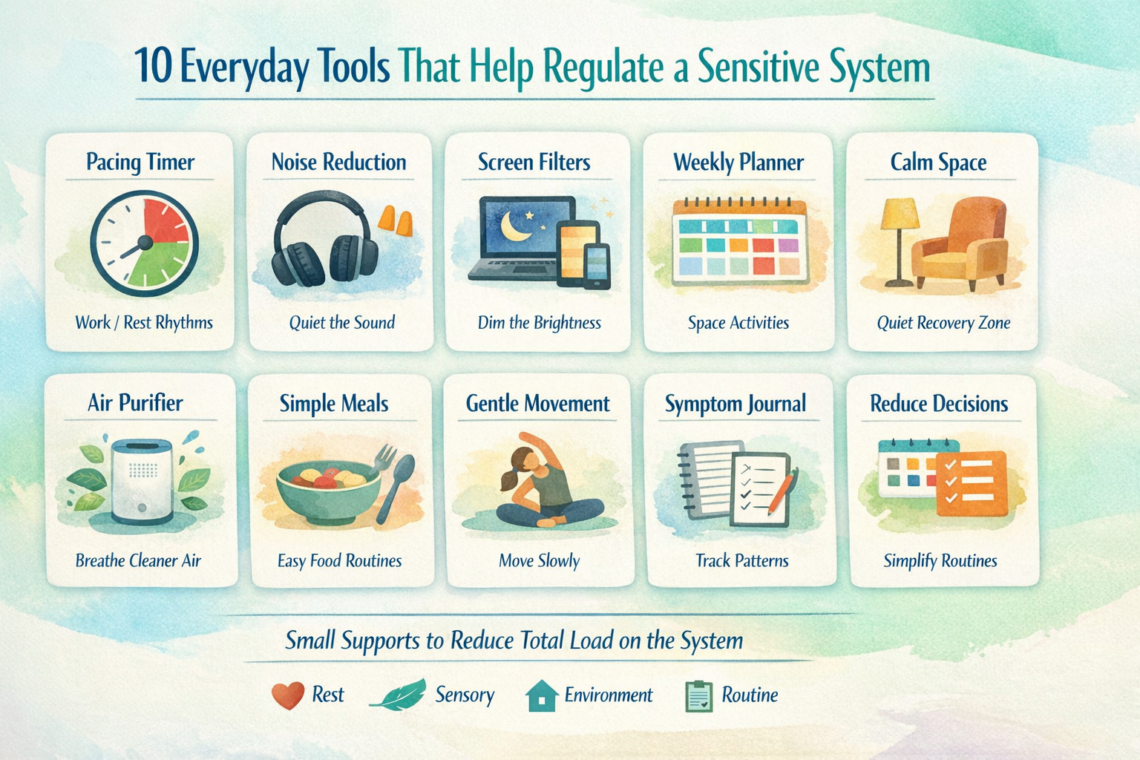
10 Helpful Tools for Managing Regulation Sensitivity
1. A Pacing Timer (Pomodoro Style)
A pacing timer helps prevent pushing past energy limits, which can trigger fatigue, pain, and nervous system overload.
Typical rhythm:
20–30 minutes activity → 5–10 minute break
Helpful tools:
- Pomofocus
- Focus To-Do
- simple kitchen timers
This can be especially helpful for computer work or hyperfocus.
2. Noise Reduction Tools
Many people with sensory sensitivity find background noise extremely draining.
Helpful tools:
- noise-cancelling headphones
- Loop earplugs
- quiet background sound (white noise or nature sounds)
Reducing sound input can significantly lower sensory and nervous system load.
3. Blue-Light and Screen Regulation
Screens can increase sensory fatigue, headaches, and nervous system activation.
Helpful tools:
- Night Shift / Night Mode
- f.lux software
- screen dimming apps
- reducing notification alerts
Even small adjustments can help reduce visual overload.
4. Weekly Energy Planning
Instead of planning day by day, many people benefit from spacing activities across the whole week.
Helpful tools:
- simple weekly planners
- Google Calendar
- colour-coded activity blocks
This helps prevent too many demanding events in one day.
5. A Calm Recovery Space
Having a quiet place to recover can help the nervous system reset after stimulation.
This might include:
- dim lighting
- comfortable seating
- minimal noise
- low scent environment
Even 10–20 minutes of quiet recovery time can help regulation.
6. Air Quality Tools
For people sensitive to environmental triggers.
Helpful tools:
- HEPA air purifiers
- opening windows for ventilation
- fragrance-free cleaning products
Many people find that simpler product routines reduce symptom load.
7. Simple Meal Rotation
Food decision fatigue can increase stress.
Helpful strategies:
- rotating a small number of reliable meals
- batch cooking
- keeping ingredients simple
This helps reduce cognitive load and digestive stress.
8. Gentle Movement Tools
Movement helps circulation and nervous system regulation but needs to be gentle and flexible.
Helpful options:
- short walks
- gentle stretching
- yoga or mobility exercises
- pacing movement throughout the day
Consistency often helps more than intensity.
9. Symptom and Trigger Awareness
Tracking patterns can help identify what increases or reduces load.
Helpful tools:
- simple symptom journals
- habit trackers
- notes apps
Often people begin to notice patterns between:
- sleep
- stress
- sensory load
- environment
- activity levels
10. Reducing Decision Load
Decision fatigue can significantly increase stress.
Helpful tools:
- routines
- checklists
- repeating weekly rhythms
Examples:
- simple meal rotations
- set cleaning routines
- repeating weekly schedules
Reducing decisions helps protect nervous system capacity.
A Helpful Perspective
For many people with overlapping conditions, the goal is not to control every symptom.
Instead it is often more helpful to reduce the total load on the body’s regulation systems.
Small supports across many areas — sleep, pacing, sensory load, environment, and routine — can sometimes improve multiple symptoms at once.